
SERVICES
Ant Control
Ant control for recurring trails and nesting activity, with attention to species, food sources and routes into buildings.
GET A FREE QUOTE
Family Owned
33 Years Experience
Established in 1993
Open 24 Hours
What Is Ant Control?
Ant control investigates the colony-related activity behind visible trails rather than treating individual workers as the whole problem. Different ants use different nesting locations and food sources, so identification and the pattern of movement affect the control approach. On the Gold Coast, activity may appear around kitchen cupboards, paving joints, external walls or garden edges. Owners often seek help when trails return after wiping surfaces or when insects repeatedly enter through the same gap. Removing visible workers can leave nesting activity elsewhere unchanged. Treatment may involve an appropriate bait or another method together with changes to food access and harbourage, depending on the findings. The location of a trail does not necessarily identify the nest, particularly where workers travel between outdoor and indoor areas. Suspected fire ants require the relevant reporting pathway rather than an assumption that ordinary household ant treatment covers them. Before work, explain what products you have used and avoid disturbing evidence that could help establish movement routes.
Why Choose Termite and Pest Control Information Centre FOR Ant Control
A Specific Focus on Recurring Ant Activity
Ant control forms a named part of our local pest management work. Customers can therefore raise repeated trails, activity around cupboards or a concern near outdoor living areas as a specific booking discussion. Our business works across both residential and commercial settings, allowing that conversation to identify how the affected spaces are used.
Regional Knowledge Built Over Decades
Our family's involvement in South East Queensland pest management began in 1993. That history provides a regional foundation for conversations about Gold Coast ant concerns. Wayne and Lorraine's original focus on local homes remains part of the business as owners explain recurring activity that affects their kitchens, patios or other occupied property areas.
Honest Advice Rather Than Assumptions
The founders placed honest service at the centre of the business. That principle matters when customers have tried several household ant products and remain uncertain about what they are seeing. Our family approach keeps their observations relevant to the conversation instead of treating every trail or outdoor nest as the same pest situation.
Care Where Food and Family Life Meet
Our commitment to family safety and property care extends to the kitchens and shared living spaces where ant trails often become noticeable. We bring the same attention to customers' homes that we give our own. For business premises, that care also recognises that people prepare food, store belongings and use communal areas throughout the day.




What Ant Control Covers
Ant control considers the identified ants, accessible nesting evidence, movement routes and resources attracting workers. Relevant locations can include kitchen joins, plumbing penetrations, external wall edges, paving and affected garden areas. Method selection depends on the species and circumstances rather than the colour of an ant alone. Customers should explain any recent sprays or baits because those applications can affect the planned approach. Food storage, leak repairs and suitable access changes may support management, while suspected invasive ants need the appropriate identification and reporting response.
Signs You Need Ant Control
Persistent trails along benches, insects emerging from joins and repeated concentrations around food or water indicate a pattern worth assessing. Fine soil near paving or gaps can identify outdoor activity, although it does not establish which species is present. Trails that return soon after cleaning may reflect a nest or resource that remains elsewhere. Record direction, entry points and timing without applying more products over the evidence. If ants sting or a nest appears suspicious, avoid disturbing it and obtain identification rather than handling specimens.
DISCOVER WHAT OUR CUSTOMERS HAVE TO SAY ABOUT US
REVIEWS
our process
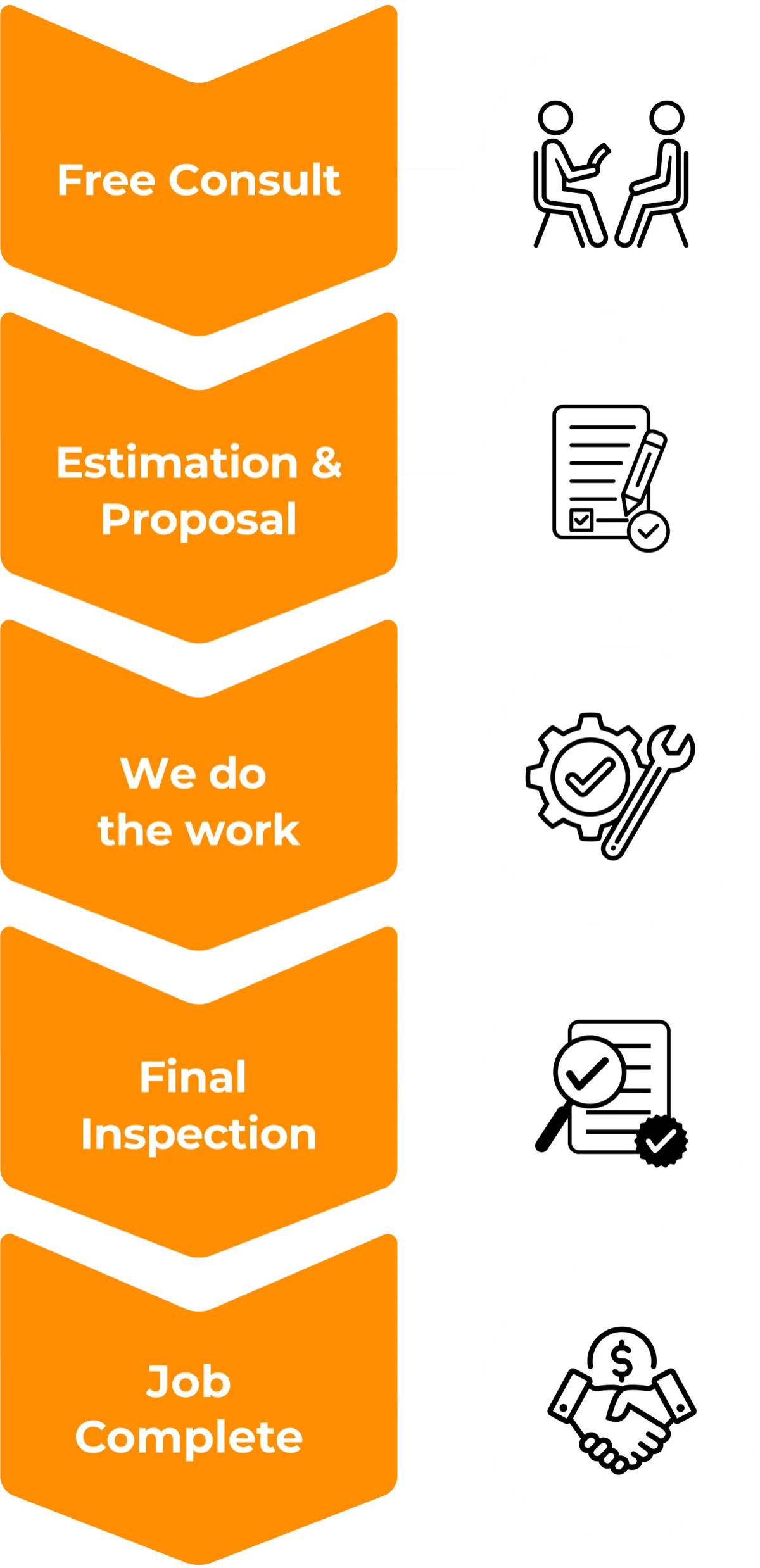
A simple process from first call to finished job.

SERVICE AREAS
proudly serving Gold Coast

FREQUENTLY ASKED QUESTIONS
Your questions answered
Why do ant trails return after I wipe them away?
Cleaning can remove visible workers and residues without addressing a nest, food source or access route elsewhere. Workers may establish another trail if the resource remains available. Record where they emerge and what attracts them. That information helps assess the underlying activity rather than repeatedly treating the same visible line.
Should I spray ants before a bait treatment?
Discuss the planned approach first. Sprays near bait placements or trails can interfere with how ants reach or feed on a product. Explain what you have already applied and where. Do not combine products simply to increase the effect; use the preparation and product directions for the agreed method.
Does an indoor trail mean the nest is inside the wall?
Not necessarily. Workers can travel from outdoor nests to food or moisture indoors, and a visible entry gap may only be part of their route. Assessment considers the movement pattern and relevant surrounding areas. Avoid opening walls or sealing every active point before the source and suitable approach receive consideration.
How should I prepare a kitchen for ant control?
Identify the active trails and discuss which cupboards or surfaces need access. Store exposed food appropriately and follow instructions for utensils and household items. Explain leaks and recent cleaning or pesticide use. Preparation should reflect the proposed placements rather than assuming every cupboard needs emptying or every surface needs spraying.
Does ordinary ant control cover suspected fire ants?
Do not assume it does. Suspected fire ants need prompt reporting through the National Fire Ant Eradication Program and handling consistent with its directions. Avoid disturbing the nest or moving potentially affected materials while seeking guidance. Colour alone does not establish identification, so use the official reporting pathway for suspicious activity.
READY TO take the next step?
get a free quote TODAY!
Termite & Pest Control Information Centre
7 Driftwood Place, PARKWOOD QLD 4214

