
SERVICES
Termite Inspections
Termite inspections for Gold Coast homes and businesses, checking accessible areas for activity, damage and conditions that encourage concealed entry.
GET A FREE QUOTE
Family Owned
33 Years Experience
Established in 1993
Open 24 Hours
What Are Termite Inspections?
Termite inspections examine accessible parts of a property for evidence of termites, timber damage and conditions that could support an infestation. An inspector checks relevant internal and external areas, looking for shelter tubes, damaged wood, moisture concerns and potential entry routes. Gold Coast property owners may arrange an inspection after noticing suspicious timber damage, discovering insects during renovations or reviewing their regular property maintenance. Brick and concrete buildings can still contain timber framing, door jambs and other vulnerable components, so the external appearance alone does not establish the risk. If owners leave active termites undetected, the insects can continue feeding within concealed timber before obvious surface damage appears. A visual inspection cannot expose every wall cavity or examine areas that stored belongings, fixed finishes or unsafe access prevent the inspector from reaching. Understanding those limitations helps owners interpret the findings and decide whether they need further investigation, maintenance changes or an assessment of suspected activity.
Why Choose Termite and Pest Control Information Centre for Termite Inspections
Decades of Regional Experience
Our family has worked in pest management across South East Queensland since 1993. That regional experience gives our termite inspection work a local foundation. Properties differ in construction, surrounding vegetation and maintenance history, and our longstanding focus on Queensland homes brings context to conversations about termite concerns and property conditions.
Honest Advice About Your Concerns
Wayne and Lorraine founded the business around honest advice and personal service. We carry that approach into conversations about termite inspections. Whether you have noticed damaged timber or want to discuss routine checks, our focus remains helping you understand your concern without treating every observation as proof of an active infestation.
Care for Occupied Properties
Our family’s commitment to property care extends to both homes and commercial premises. Termite inspections concern buildings that people live in, work in and maintain every day. We bring the same attention to those properties that we give our own home, with family safety central to the business Wayne and Lorraine established.
Knowledge Across Two Generations
Dan and Luke grew up learning the trade before taking the reins of the family business. Their involvement connects established pest management knowledge with an interest in modern methods. For termite inspection customers, that continuity keeps the business grounded in its original purpose while the next generation develops its approach to property protection.
What Termite Inspections Cover
A termite inspection focuses on accessible evidence and the conditions around it. Depending on the property and agreed scope, the inspection can involve internal timber components, external walls, visible foundations, accessible roof spaces and subfloor areas. Relevant observations include termite workings, timber deterioration, moisture concerns and materials that conceal possible entry routes. Previous inspection documents and termite management records can provide useful context. Access restrictions affect what an inspector can examine, so owners should discuss blocked hatches, fixed coverings and other limitations before the visit.
Signs You Need Termite Inspections
Mud-like tubes along walls, foundations or timber can indicate termite workings. Damaged skirting boards, hollow-sounding wood and timber surfaces that break easily also warrant investigation. Doors that suddenly bind or unexplained changes around timber frames can have several causes, including moisture or building movement, so an inspection helps assess the evidence. Fresh garden beds against external walls, concealed slab edges and persistent leaks create additional reasons to review the property. Avoid breaking open suspected workings or applying household insect spray before assessment.
DISCOVER WHAT OUR CUSTOMERS HAVE TO SAY ABOUT US
REVIEWS
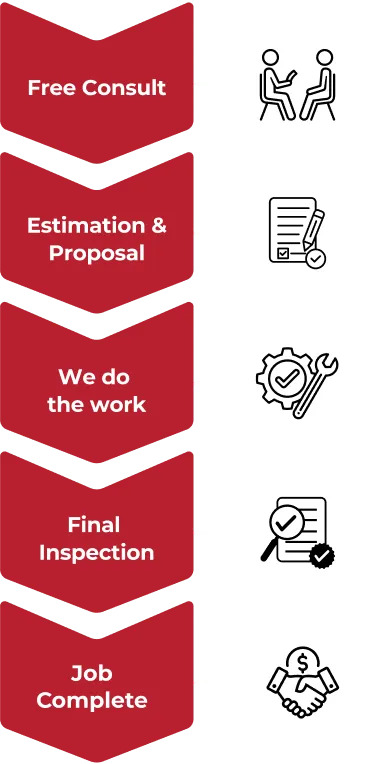
our process
A simple process from first call to finished job.

SERVICE AREAS
proudly serving Gold Coast

FREQUENTLY ASKED QUESTIONS
Your questions answered
How often should I arrange a termite inspection?
QBCC guidance generally recommends inspections at least annually, with more frequent checks where the termite hazard warrants them. The appropriate interval depends on the property, previous findings and installed management system. Arrange an assessment sooner if you discover suspected activity rather than waiting for the next routine inspection.
Do brick homes still need termite inspections?
Yes. Brick homes often contain timber roof framing, internal wall frames, door jambs and other components that termites can damage. Termites may reach these materials through concealed routes. The brick exterior does not establish whether timber inside the building is free from activity or damage.
Can an inspection find termites inside every wall?
A routine visual inspection cannot examine every concealed cavity without opening the building. Fixed finishes, cabinetry, insulation and restricted access can limit the examination. Inspectors assess accessible evidence and identify relevant limitations. Suspicious findings may justify further investigation, but owners should agree to the scope before anyone disturbs building finishes.
What should I do if I find suspected termites before the inspection?
Leave the suspected workings intact and avoid spraying the area or pulling damaged timber apart. Record the location and take photographs without disturbing it. Keep people away from any visibly weakened building component. Preserving the evidence helps the inspector assess the original activity and consider the next steps.
How should I prepare my property for a termite inspection?
Locate earlier inspection reports, treatment records and any termite management documents. Make existing access hatches reachable and move stored belongings away from relevant areas where safe. Tell the inspector about leaks, renovations and previous termite damage. Discuss access requirements beforehand rather than moving heavy furniture or entering roof spaces yourself.
READY TO take the next step?
get a free quote TODAY!

Termite & Pest Control Information Centre
7 Driftwood Place, PARKWOOD QLD 4214

