
SERVICES
Wasp Control
Wasp control for nests and repeated activity near occupied spaces, with identification and access considerations before work begins.
GET A FREE QUOTE
Family Owned
33 Years Experience
Established in 1993
Open 24 Hours
What Is wasp Control?
Wasp control considers the insect, its nest and the way people use the surrounding space. Different wasps build different structures, and a solitary insect passing through a garden does not create the same situation as an active nest beside a doorway. Gold Coast properties can provide sheltered sites around eaves, sheds, outdoor furniture and other structures. Owners often seek help when repeated flight paths cross an entrance or when they discover a nest during gardening or maintenance. Disturbing it with a hose, ladder or household spray can provoke defensive activity and make access more difficult. The appropriate response depends on identification, nest location and risks to people or animals nearby. Some nests remain concealed, so repeated traffic through a gap may provide the main visible evidence. Management should address the agreed nest or activity rather than indiscriminately treating garden insects. Owners should keep clear, record the location from a distance and explain access restrictions before anyone approaches the affected structure.
Why Choose Termite and Pest Control Information Centre FOR wasp Control
Family Safety Around Entrances and Gardens
Our founders began the business with a commitment to protecting local homes and family safety. A wasp nest beside a doorway or outdoor sitting area connects directly to that purpose. We bring our family's property care approach to the concern, keeping attention on how occupants need to use the affected space.
A Specific Wasp Control Service
Wasp control forms a named part of our work for local homes and business premises. Owners can therefore discuss a nest location or repeated activity as a specific concern rather than an undefined garden pest problem. Our existing residential and commercial work gives both householders and business operators a place to raise those observations.
Longstanding South East Queensland Experience
Wayne and Lorraine established the business in South East Queensland in 1993, and our family continues to serve the Gold Coast from Parkwood. That regional foundation matters when owners want a local business connection while explaining a nest near their property. Our involvement in local pest management extends across decades rather than an occasional regional visit.
Personal Attention as the Family Continues
Dan and Luke grew up learning the trade and now carry the business into its next chapter. They retain the founders' focus on honest advice and personal service while bringing an interest in modern pest methods. For customers concerned about wasps, that continuity keeps the conversation grounded in the family's approach to occupied property care.

What wasp Control Covers
Wasp control concerns the identified activity and relevant nest location, with assessment of safe access and nearby occupied areas. Visible nests beneath eaves or structures present different access questions from insects repeatedly entering a concealed gap. The proposed work should explain its target, preparation, exclusion area and any later nest handling. Customers should identify pets, frequent pedestrian routes and maintenance planned nearby. Nest treatment does not automatically include opening wall cavities, repairing building finishes or removing every harmless solitary wasp visiting the garden.
Signs You Need wasp Control
Repeated wasp traffic through one gap, a developing nest beneath an eave or insects defending a particular outdoor location warrant attention. A visible open-cell nest and a concealed entrance can require different assessment, so do not identify the species from nest position alone. Activity beside doors, play equipment or frequently handled storage deserves particular care. Keep people and pets away and avoid tapping, spraying or hosing the structure. Photograph from a safe distance if practical, without climbing or moving objects to expose the nest.
DISCOVER WHAT OUR CUSTOMERS HAVE TO SAY ABOUT US
REVIEWS
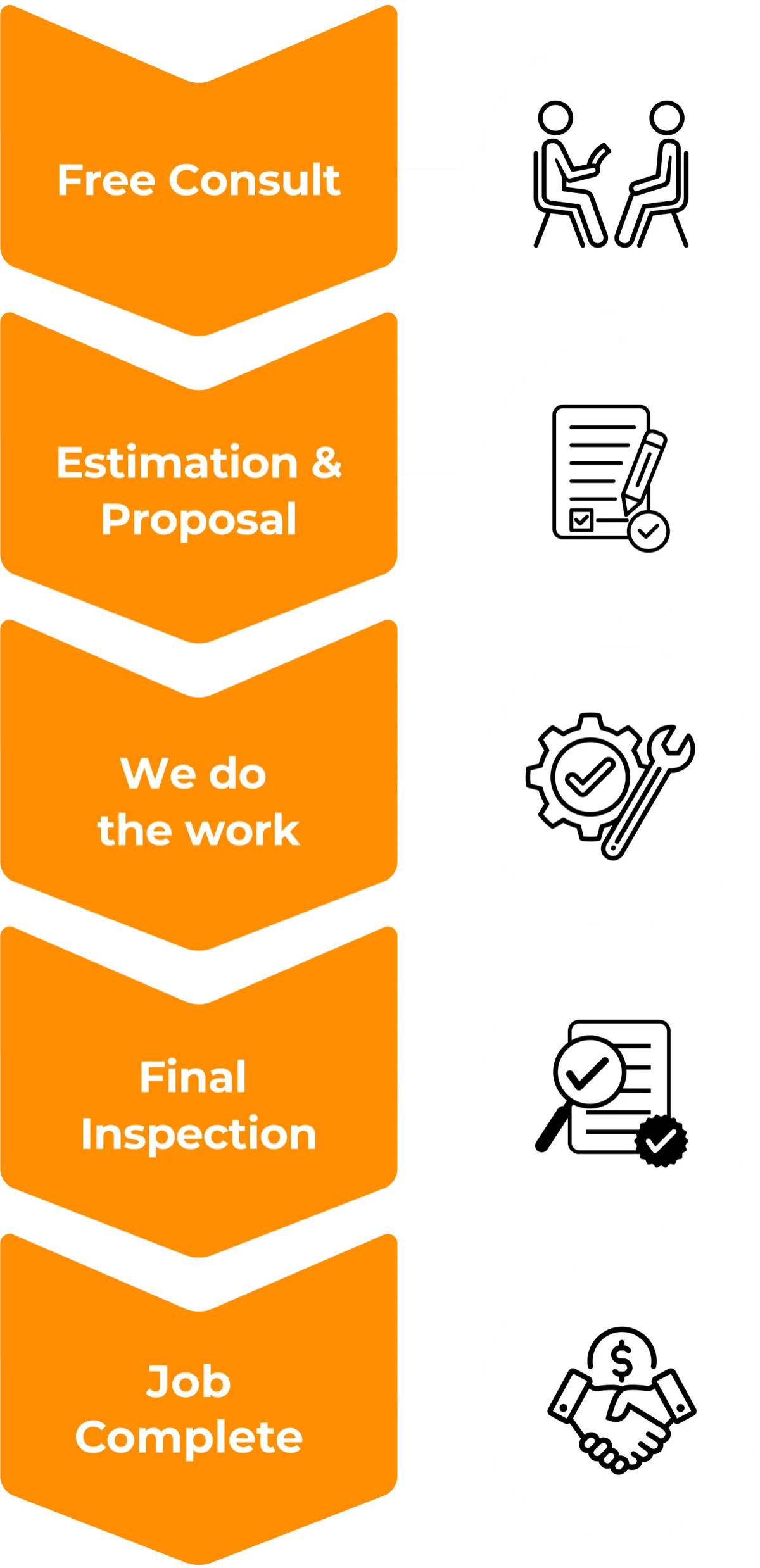
our process
A simple process from first call to finished job.

SERVICE AREAS
proudly serving Gold Coast

FREQUENTLY ASKED QUESTIONS
Your questions answered
Should I knock down a nest before booking?
No. Disturbing an active nest can trigger defensive activity and scatter insects around the area. Keep clear and avoid work that vibrates or strikes the structure. Explain the location and observed flight path before the visit. A safe assessment should precede any decision about treatment or later nest removal.
Can you tell whether insects are wasps or bees?
Identification matters because bees, social wasps and solitary wasps can require different responses. A clear photograph from a safe distance may help, but appearance or location alone may remain inconclusive. Do not handle insects to obtain a closer image. Explain the activity and avoid assuming every striped insect needs nest treatment.
What if wasps disappear into a hole in the wall?
Repeated traffic can indicate concealed activity, but the nest position needs assessment. Do not block the opening or spray into it without a suitable plan. Explain the exact entry location and any activity inside the building. Access to a concealed nest may involve limitations or separate building work that needs discussion beforehand.
Will the nest be removed at the same time?
That depends on its location, the treatment approach and whether activity has stopped sufficiently for later handling. A concealed nest also presents different access issues from an exposed one. Confirm whether removal forms part of the scope instead of assuming treatment includes opening structures or immediate physical removal.
What should I do while waiting for assessment?
Keep people and animals away from the affected location and avoid nearby mowing, pruning or maintenance that could disturb it. Use another entrance where practical. Provide observations from a safe position, including the nest location and activity pattern. Do not climb, hose the nest or test whether the insects will react.
READY TO take the next step?
get a free quote TODAY!

Termite & Pest Control Information Centre
7 Driftwood Place, PARKWOOD QLD 4214

