
SERVICES
Termite Barriers & Protection
Termite protection for homes and businesses, addressing concealed entry routes and the maintenance needs of existing management systems.
GET A FREE QUOTE
Family Owned
33 Years Experience
Established in 1993
Open 24 Hours
What Are Termite Barriers & Protection?
Termite barriers and protection reduce the opportunity for termites to enter a building through concealed routes. The appropriate approach depends on construction, access, existing measures and the conditions around the property. Physical components, chemically treated zones and monitoring arrangements serve different purposes, so owners need to understand what their particular system does. On the Gold Coast, garden beds, irrigation and later paving can change the relationship between the ground and a building after its original construction. A protection assessment considers those changes alongside available installation records and visible system components. Owners often seek advice when buying a property, planning landscaping or discovering that they cannot identify their existing protection. Leaving damaged components, covered inspection zones or overdue maintenance unresolved can weaken the management arrangement. Protection also relies on ongoing inspections and suitable property upkeep. A system does not establish that every concealed timber component is free from termites, and routine observation remains necessary after installation.
Why Choose Termite and Pest Control Information Centre for Termite Barriers & Protection
Experience With Regional Termite Concerns
Our family has worked across South East Queensland since 1993, including the coastal environments where termite protection matters throughout a building's life. That history gives our protection work a regional foundation. We bring decades in the trade to discussions about protecting existing homes, understanding earlier work and maintaining attention to termite risk over time.
Protection Beyond the Initial Problem
We provide termite barriers and protection alongside termite inspections and treatment. Those service categories address different owner concerns, from reviewing protection to responding to discovered activity. Their place within our business means property owners can discuss the difference between an immediate termite problem and the longer task of managing concealed entry into a building.
A Family Interest in Property Care
Wayne and Lorraine established the business to protect local homes while providing honest, personal service. Termite protection connects directly to that purpose because owners need to understand what they are maintaining after work finishes. Our family approach keeps the condition of the property and the people relying on it central to those conversations.
Trade Knowledge With a Future Focus
Dan and Luke grew up learning the trade and are now taking the business forward with an interest in modern pest technology. That combination matters when owners encounter unfamiliar protection terminology or different management approaches. The next generation carries the family's local knowledge into discussions about maintaining protection as properties and methods change.

What Termite Barriers & Protection Cover
We provide termite barriers and protection for residential and commercial properties, with the work depending on the building and its existing management arrangements. Relevant considerations include construction joints, accessible perimeter areas, inspection zones, previous treatment records and any changes from landscaping or renovations. Owners should discuss the proposed method, affected locations and maintenance requirements before work begins. Some measures suit particular construction stages or access conditions rather than every existing building. The agreed scope should identify what the protection addresses and which inspections or servicing remain necessary.
Signs You Need Termite Barriers & Protection
Review your protection if soil or mulch covers the building edge, new paving conceals inspection areas, or renovations disturb known system locations. Damaged components, inaccessible service points and missing maintenance records also warrant attention. Persistent irrigation against walls or leaking outdoor plumbing can create conditions that need correction alongside protection work. Mud-like workings or suspicious timber damage require assessment for possible activity rather than a protection upgrade alone. A house with no obvious damage can still need a review when owners cannot establish what system exists.
DISCOVER WHAT OUR CUSTOMERS HAVE TO SAY ABOUT US
REVIEWS
our process
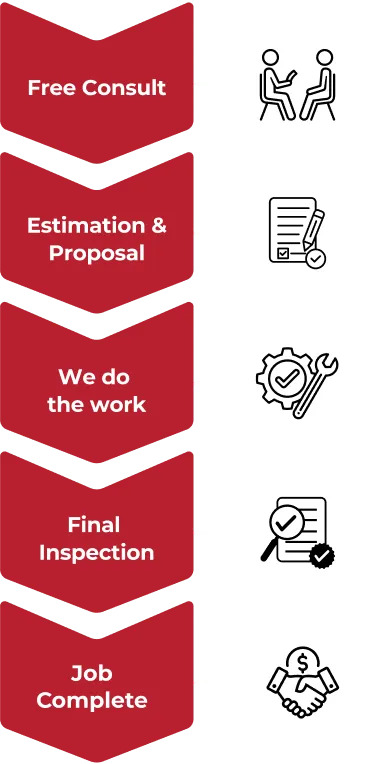
A simple process from first call to finished job.

SERVICE AREAS
proudly serving Gold Coast

FREQUENTLY ASKED QUESTIONS
Your questions answered
Is a termite barrier the same as termite treatment?
No. Protection measures address the risk of termite entry, while treatment responds to identified activity. A property may need consideration of both, but one does not automatically replace the other. The proposed work should explain its purpose, the affected building areas and any continuing inspection or maintenance requirements.
Can an existing house have termite protection installed?
Existing houses can have protection options, but construction and access affect what is practical. Concrete paths, adjoining structures, extensions and concealed areas can limit particular methods. Assessment should consider the whole arrangement rather than assuming a system suitable during new construction can be added unchanged to an occupied building.
Will protection remove the need for inspections?
No. Termites may bridge or bypass management measures, and later property changes can affect their function. Regular inspections remain part of termite management. Follow the inspection advice appropriate to the building and maintain any components or treated areas according to the requirements of the installed system.
Can landscaping interfere with termite protection?
Yes. Excavation can disturb treated areas, while raised soil, mulch or paving can conceal inspection zones. Before changing the building perimeter, locate the management records and discuss the proposed levels and excavation. Review the affected arrangement after the work rather than assuming the original protection remains unchanged.
How do I identify the protection already at my property?
Look for the termite management notice in a safely accessible location, often the electrical meter box, and gather installation or maintenance records. These may identify the system and its requirements. A missing label does not prove that no protection exists, but it leaves information that needs clarification.
READY TO take the next step?
get a free quote TODAY!
Termite & Pest Control Information Centre
7 Driftwood Place, PARKWOOD QLD 4214

