
SERVICES
Termite Treatment
Treatment for identified termite activity in homes and businesses, with the approach based on the infestation and property conditions.
GET A FREE QUOTE
Family Owned
33 Years Experience
Established in 1993
Open 24 Hours
What Is Termite Treatment?
Termite treatment addresses an identified infestation rather than simply removing the insects visible on a surface. The first task is to establish where activity occurs, what evidence remains accessible and how the termites interact with the building. Treatment methods vary with the species, infestation, construction and available access. Finding damaged timber does not, by itself, establish whether termites remain active, and old damage requires a different interpretation from live workings. Gold Coast owners often discover a problem during renovations, after a timber surface breaks or when mud-like tubes appear around a wall or foundation. Delaying assessment can allow active termites to continue feeding within concealed components. Spraying household insecticide or pulling apart workings before assessment can also interfere with the evidence. Treatment planning should address the discovered activity, relevant limitations and any monitoring or further visits the method requires. Structural repair and longer-term protection are separate considerations that owners may need to address after the infestation assessment.
Why Choose Termite and Pest Control Information Centre for Termite Treatment
A Longstanding Termite Focus
Our business provides termite inspections, treatment and protection as established parts of its work across South East Queensland. Wayne and Lorraine began that regional work in 1993. For an owner who has discovered suspected activity, our history connects the immediate concern with a business that has focused on local termite problems for decades.
Honest Discussion During an Unsettling Discovery
The founders built the business around honest advice and personal service. Those principles matter when someone uncovers damaged framing or live termite workings and needs to understand what happens next. Our family approach keeps the conversation grounded in the property concern rather than treating every discovery as the same kind of infestation.
Care for Homes and Workplaces
We address termite concerns at both residential and commercial properties. A discovery can interrupt a household renovation or raise questions about an occupied workplace, so the people using the building remain relevant to the discussion. Our family brings the same care and attention to those properties that we give our own home.
Experience Shared With the Next Generation
Dan and Luke learned the trade while growing up within the family business. As they take the reins, they carry that knowledge into the company's future alongside an interest in modern pest methods. Termite treatment remains part of that continuity, connecting practical regional experience with the next generation's involvement in property protection.


What Termite Treatment Cover
Termite treatment concerns identified activity in a building or relevant property area. Assessment considers live workings, accessible damage, likely entry routes and the evidence needed to select an appropriate approach. Methods can differ between infestations, and not every location allows the same application or access. The agreed work should identify treatment locations, preparation requirements and any planned monitoring. Owners also need to distinguish pest treatment from building repairs: controlling termites does not restore timber strength or establish the structural condition of damaged components.
Signs You Need Termite Treatment
Live pale insects inside damaged wood, mud shelter tubes and fresh workings around foundations or walls warrant termite assessment. Timber that breaks into thin shells or exposes internal galleries can reveal concealed damage. Sticking doors, uneven surfaces or hollow sounds may have other causes and need investigation rather than an assumption. If you uncover activity while renovating, stop disturbing that location and record it from a safe position. Keep people away from visibly weakened components and leave the workings intact for examination before choosing a treatment.
DISCOVER WHAT OUR CUSTOMERS HAVE TO SAY ABOUT US
REVIEWS
our process
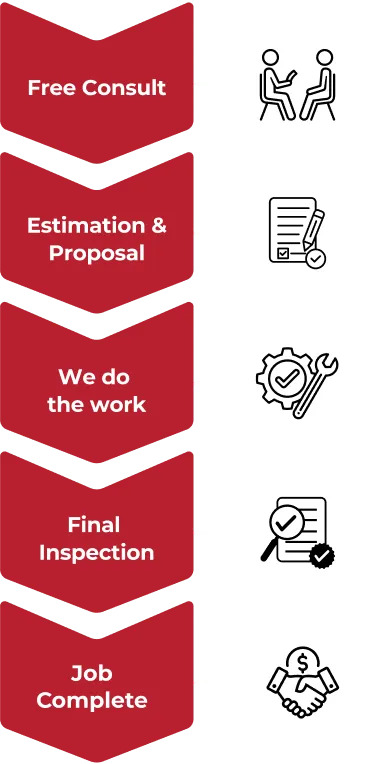
A simple process from first call to finished job.

SERVICE AREAS
proudly serving Gold Coast

FREQUENTLY ASKED QUESTIONS
Your questions answered
Should I spray termites when I discover them?
Avoid applying household insecticide or breaking open the workings before assessment. Disturbance can alter the evidence and the activity at that location. Record where you found the insects and leave the area intact. If timber appears weakened, keep people away from the affected component while the condition receives attention.
Does termite damage mean the infestation is still active?
Not necessarily. Old damage can remain after earlier activity, and concealed termites may also occupy areas that show little surface change. Assessment needs to distinguish the visible damage from evidence of current activity. Previous treatment documents and the history of the discovery can help explain what the findings mean.
Will treatment repair damaged timber?
No. Pest treatment addresses termite activity; it does not rebuild timber or assess every structural consequence. Damaged building components may need separate examination and repair by an appropriate building professional. Coordinate that work with the termite assessment so repairs do not unnecessarily remove evidence or interfere with the management approach.
Does every termite infestation need the same method?
No. Species, activity location, building design and access affect method selection. An approach that suits one infestation may not suit another. Before work starts, understand which areas the proposed treatment addresses, any access limitations and whether the method requires monitoring or additional visits to assess its progress.
Can I continue renovating after finding termites?
Pause work at the affected location until the evidence receives assessment. Opening more timber or removing materials can change the activity and obscure its extent. Other work may also affect access or treatment locations. Discuss the renovation sequence before restarting, and obtain separate building advice where damage raises structural concerns.
READY TO take the next step?
get a free quote TODAY!
Termite & Pest Control Information Centre
7 Driftwood Place, PARKWOOD QLD 4214

