
BLOG
Scratching in the Roof or Burrows in the Garden: Understanding Different Rodent Problems Around Gold Coast Properties
Scratching above a bedroom and a burrow beside a garden shed may indicate different animal activity. On Gold Coast properties, identifying the animal and its routes matters before deciding how to manage the problem.
Noise alone cannot reliably distinguish a rat from a possum or another animal. A useful assessment combines the location of activity with visible evidence, food sources and access points. Treating every unexplained sound as the same pest can leave the actual cause unresolved.
Roof rats, brown rats and mice behave differently
City of Gold Coast identifies three introduced pest rodents: the roof rat, brown rat and house mouse. Roof rats climb and occur in roofs, ceilings, trees and dense vegetation. Brown rats tend to live at ground level and can burrow and swim. House mice are smaller and can enter through very small openings. City of Gold Coast
These differences influence where an inspection begins. Activity high in a building calls for attention to elevated access, while burrowing near ground-level structures raises different questions.
However, location is a clue rather than a definitive identification. An animal seen briefly in poor light may also appear larger or smaller than it is.
Photographs taken without approaching or handling the animal can help with identification. Record where the animal appeared and whether it travelled along a fence, entered a roof opening or disappeared beneath a structure.
How to record evidence without disturbing it
Start with a simple activity record. Note when sounds occur, which room they appear above and whether they remain in one place or move across the ceiling.
Look from accessible ground-level areas for damaged food packaging, droppings, gnaw marks or repeated movement routes. Photograph evidence before moving nearby belongings.
A single old sign does not establish the scale of current activity. Comparing dated photographs can help distinguish an ongoing problem from evidence left by earlier occupants or a previous infestation.
Do not enter a roof space solely to investigate noises. Ceiling materials, electrical installations, heat and restricted movement create hazards unrelated to the animal itself.
Avoid handling droppings or sweeping contaminated dust into the air. If contamination needs cleaning, obtain suitable advice for the location and extent rather than treating it as ordinary household dust.
Why food and shelter matter beyond the kitchen
A rodent problem may involve resources outside the room where activity becomes noticeable. Pet feeding areas, stored animal feed, fallen fruit and accessible rubbish can support animals that shelter elsewhere.
Examine the relationship between the building and surrounding storage. A crowded shed beside an overgrown fence may provide cover close to potential access routes.
For a business, receiving areas and stock storage deserve attention as well as food preparation spaces. Packaging damage can occur away from the place where food is consumed.
Record recurring activity before rearranging everything. Moving a food source may change where animals travel without explaining how they entered the building.
A practical property plan connects the evidence, available resources and access routes. Removing one visible animal does not explain whether those underlying conditions remain.
When the animal may be native wildlife
Queensland homes can also shelter possums, and native small mammals occur in the wider environment. A noise in the roof does not establish that an introduced rodent is responsible.
Queensland Government information specifically addresses distinguishing rats from possums in roofs. Possum management involves different considerations from rodent management, so identification should precede exclusion or trapping decisions.
Do not seal an active opening simply because it looks like the likely entrance. Animals may remain inside, and dependent young may not leave with an adult.
Likewise, do not select a bait merely because a small mammal has appeared near the house. The target animal, access by pets and presence of wildlife all affect the suitability of a control method.
Keep a record of what was observed, what changed and whether activity continued afterwards. That evidence helps distinguish a resolved access problem from an infestation that has shifted elsewhere within the property.



DISCOVER WHAT OUR CUSTOMERS HAVE TO SAY ABOUT US
REVIEWS
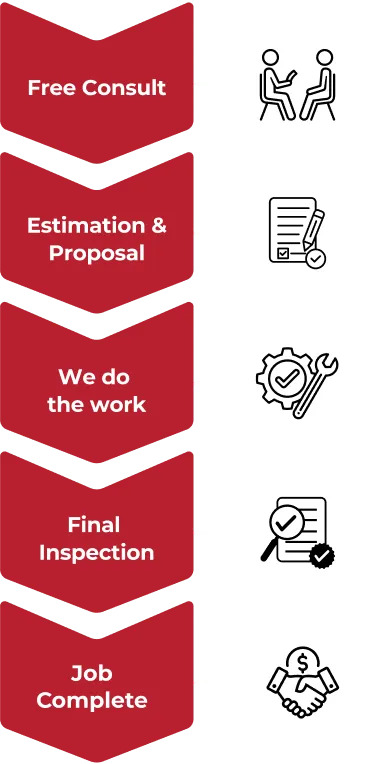
our process
Our process is simple and only contains a few simple steps

SERVICE AREAS
proudly serving Gold Coast

READY TO take the next step?
get a free quote TODAY!

Termite & Pest Control Information Centre
7 Driftwood Place, PARKWOOD QLD 4214

