
BLOG
A Complete Guide to Termite Inspections for Gold Coast Homes: What Inspectors Check and What Can Remain Hidden
A termite inspection examines accessible parts of a property for termite activity, damage and conditions that could support an infestation. For Gold Coast homeowners, understanding the inspection process helps explain what a report can establish and where uncertainty remains.
A house can contain concealed timber even when its exterior consists mainly of brick, render or concrete. Roof framing, internal wall frames, door jambs and other timber components may sit behind finished surfaces. An inspection therefore involves more than looking for insects around the garden.
What an inspector looks for around the building
An inspector examines accessible areas for evidence such as termite workings, shelter tubes and damaged timber. They also consider features that could allow concealed entry, including timber contacting soil and materials covering the building’s inspection zones.
Inside the home, accessible skirting boards, door frames and other timber components may provide useful evidence. Roof spaces and subfloor areas can also matter, depending on the construction and whether safe access exists.
Outside, the relationship between ground levels, garden beds, retaining structures and the building perimeter deserves attention. A raised garden against a wall creates a different inspection problem from an unobstructed slab edge.
Previous reports and treatment records provide context. A record of earlier damage does not establish current activity, but it identifies areas that warrant closer consideration.
Why moisture readings need careful interpretation
Moisture can help explain why a location deserves further investigation. Plumbing leaks, poor drainage and persistently damp areas can create conditions favourable to termites.
However, an elevated moisture reading is not proof of an infestation. Water can enter through leaking showers, roofs, windows or pipework without termites being present.
Likewise, a normal reading does not establish that every concealed timber component is sound. Instruments provide information about the locations tested, within their operating limitations.
For owners, the useful distinction is between evidence of termites and conditions that increase concern. A report should make that distinction clear rather than treating every damp patch as confirmed termite activity.
Photographs, precise locations and descriptions help owners understand whether the recommendation concerns moisture repairs, access improvements or additional termite investigation.
What a visual inspection cannot establish
A routine visual inspection does not expose every wall cavity or dismantle the building. Fixed cabinetry, insulation, floor coverings, stored belongings and inaccessible roof sections can restrict the examination.
Consider a wardrobe positioned against an internal wall. If it blocks the skirting and wall surface, the inspector cannot assess those concealed areas in the same way as an exposed section.
Access limitations should appear in the report. Their significance depends on what they prevent the inspector from examining, rather than simply how many limitations appear on the page.
“No evidence found” describes the inspection findings within its scope. It does not mean that concealed activity is impossible or that termites cannot enter later.
Where evidence justifies further investigation, the next step may involve arranging access or agreeing to a more intrusive examination. Owners should understand the proposed scope before any building finishes are disturbed.
How owners can make inspection findings more useful
Before an inspection, locate previous reports, treatment records and any termite management information supplied with the property. Tell the inspector about past leaks, renovations, extensions and known damage.
Make existing access hatches reachable where practical. Move stored items away from relevant inspection areas when safe, but leave suspected termite workings intact.
Avoid scraping away shelter tubes or spraying suspicious timber before assessment. Altering the evidence can make it harder to understand the original activity.
Afterwards, read the observations and recommendations together. A recommendation to improve access addresses uncertainty, while a recommendation to repair a leak addresses a contributing property condition.
QBCC guidance recommends regular inspections, generally annually and more frequently where the hazard warrants it. An installed termite management system does not remove the need to inspect the building. The appropriate inspection interval should reflect the property, its conditions and the system requirements.


DISCOVER WHAT OUR CUSTOMERS HAVE TO SAY ABOUT US
REVIEWS
our process
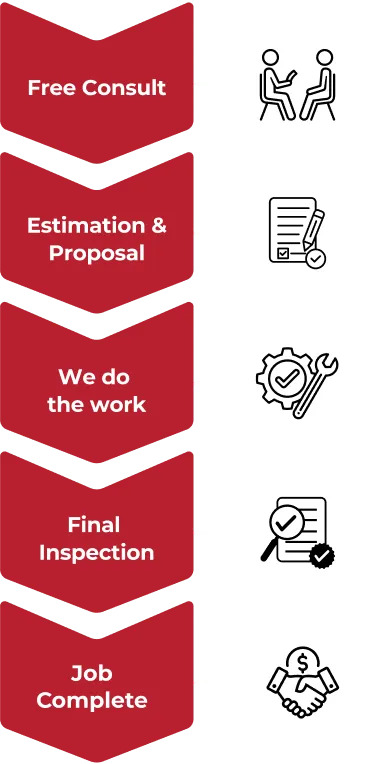
Our process is simple and only contains a few simple steps

SERVICE AREAS
proudly serving Gold Coast

READY TO take the next step?
get a free quote TODAY!

Termite & Pest Control Information Centre
7 Driftwood Place, PARKWOOD QLD 4214

