BLOG
Preparing Your Gold Coast Home for Pest Treatment: Questions to Ask About Food, Pets, Access and Re-entry
Preparing a Gold Coast home for pest treatment starts with understanding the proposed work. Different products and application methods require different precautions, so a generic checklist cannot replace instructions for the actual treatment.
A targeted bait application, a surface treatment and work within a roof space do not involve identical preparation. Before moving furniture or emptying cupboards, establish which areas need access and what the technician wants occupants to do before, during and after the visit.
Confirm the treatment areas before moving belongings
Ask which rooms, external areas or concealed spaces form part of the proposed work. Establish whether access is needed behind appliances, inside cupboards or through an existing ceiling hatch.
Move belongings only where the instructions require it and where doing so is safe. Heavy furniture and connected appliances may need a different arrangement.
Tell the technician about inaccessible rooms, locked gates and areas controlled by another occupant. For units and townhouses, shared access may require coordination with a building manager.
Photographs of pest activity can also help identify locations before the visit. Include the room or external position rather than supplying a close-up without context.
Queensland Health explains that pest management licences specify authorised activities. Owners can check that the person undertaking the proposed pesticide work holds the relevant authorisation.
Clarify what to do with food and household items
Food preparation areas deserve specific instructions. Ask whether exposed food, utensils, dishes, chopping boards and small appliances need removal or protection.
Do not assume every cupboard must be emptied. The requirement depends on where and how the product will be applied.
Identify items that people place directly in their mouths or against their skin, including children’s feeding equipment. Explain where these items are normally stored so that preparation addresses the actual treatment area.
Outdoor cooking spaces also need consideration when external work is proposed. Ask about benches, cooking utensils, pet bowls and nearby edible plants.
After treatment, cleaning instructions matter as much as preparation. Some surfaces may need cleaning before use, while cleaning other treated locations could remove a product intended to remain there. Obtain directions that distinguish between those areas rather than applying one rule throughout the house.
Discuss pets and occupants before the appointment
Provide details about the animals at the property, including their housing and access to treatment areas. A dog using the garden creates different questions from fish in an aquarium or birds in an aviary.
Ask what needs relocation, what must remain isolated and when animals can return. Do not improvise aquarium or ventilation precautions without instructions appropriate to the product and setup.
Tell the technician about occupants who may need additional consideration, including young children or people with relevant sensitivities. Personal medical questions belong with an appropriate health professional.
The useful information is specific: who occupies the property, which areas they use and what exposure needs to be avoided. Describing a product as suitable for households does not establish the instructions for every occupant or animal.
If the written preparation advice does not address something present at the property, resolve that question before application begins.
Obtain clear re-entry and cleaning instructions
There is no single waiting period that applies to every pest treatment. Re-entry depends on the product, application method, treated location and relevant directions.
Ask whether restrictions apply to the entire property or only particular areas. Confirm whether opening windows, waiting for a surface to dry or avoiding a treated location forms part of the instructions.
Queensland guidance identifies pesticide details, application locations and relevant precautions as important treatment information. Keep the advice available to everyone responsible for the property, including absent occupants or a property manager.
Before normal routines resume, check the directions for floors, benches, bedding, outdoor surfaces and pet areas as applicable. Do not substitute smell or appearance for the stated requirements.
Keep a record of the treatment and instructions with the property’s maintenance documents. This helps explain what was applied, where it was used and which precautions remain relevant after the appointment.
DISCOVER WHAT OUR CUSTOMERS HAVE TO SAY ABOUT US
REVIEWS
our process
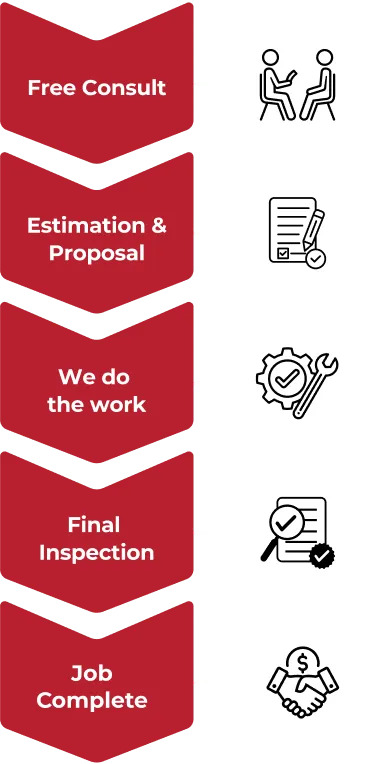
Our process is simple and only contains a few simple steps

SERVICE AREAS
proudly serving Gold Coast

READY TO take the next step?
get a free quote TODAY!
Termite & Pest Control Information Centre
7 Driftwood Place, PARKWOOD QLD 4214

