BLOG
From Wayne and Lorraine to Dan and Luke: The Family Behind Termite and Pest Control Information Centre on the Gold Coast
Termite and Pest Control Information Centre began with Wayne and Lorraine Wade working to protect homes across South East Queensland. Their Gold Coast family business grew from a single truck and a focus on personal service.
Their sons Dan and Luke are now taking the reins after growing up around the trade. The transition connects practical knowledge gained within the family with an interest in modern pest management methods. It also raises a useful question: which parts of local trade knowledge should pass between generations?
What the founders set out to provide
Wayne and Lorraine established the business around a straightforward purpose: protecting local homes from pests while offering honest advice and personal attention.
For a property owner, those aims relate to practical decisions. A person needs to understand what evidence exists, what remains uncertain and what a proposed approach involves.
Pest problems can be difficult to interpret without trade knowledge. A damaged timber surface, insects near a window or sounds above a ceiling do not always explain the underlying cause.
Clear explanations help owners distinguish an observation from a conclusion. They also make it easier to understand why an inspection, additional access or a change in property maintenance may matter.
The family’s original emphasis on personal service remains relevant because pest management involves occupied places. Work at a home affects the people, animals and daily routines within it.
How trade knowledge moves between generations
Dan and Luke grew up learning the trade from the ground up. Their involvement gives the business a direct connection between its founding generation and the people shaping its future.
Experience within a trade includes more than recognising an insect. It involves understanding where to look, which questions to ask and when the available evidence does not support a firm conclusion.
A useful example is the difference between visible damage and confirmed current activity. Similar-looking conditions can require different explanations, and earlier observations may help frame the next investigation.
However, inherited experience should not replace documented findings. Every property still needs assessment on its own evidence, particularly when building layouts, occupants or maintenance conditions have changed.
The value of passing on knowledge lies in improving judgement while retaining that distinction. Familiarity with earlier situations provides context; it does not make two properties identical.
Why local properties require individual attention
The family works across a region containing homes, rental properties and commercial buildings. Those settings involve different access arrangements, occupancy patterns and maintenance responsibilities.
Within the Gold Coast, a property beside dense vegetation presents different inspection considerations from a closely managed commercial interior. A detached house also differs from a unit within a shared building.
Owners may control some conditions directly, such as storage against external walls. Other issues, including shared roof access or common landscaping, may require coordination with a property manager.
Local knowledge helps frame these questions, but suburb names alone cannot establish a property’s pest risk. Construction, drainage, access and maintenance history provide more useful detail.
A practical assessment therefore connects the broader setting with the individual building. The owner’s observations contribute to that picture, particularly when activity appears intermittently or outside an inspection visit.
What the next generation can carry forward
Dan and Luke bring an interest in modern pest technology and the continued development of the family business. New equipment can support investigation, monitoring and record keeping, depending on its purpose.
Its usefulness still depends on interpretation. An instrument reading needs a location and an explanation; a photograph needs enough context to show what it records.
The same principle applies to digital records. A clear history of observations, property changes and earlier work can help explain recurring activity more effectively than an isolated note.
For the Wade family, continuity means connecting the founders’ approach with the next generation’s methods. The practical focus remains the property itself: understanding the evidence, explaining the available information and treating the people who occupy the building with care.
That connection gives the family story its relevance beyond a change in ownership. It describes how knowledge and responsibility move together as the business enters its next chapter.



DISCOVER WHAT OUR CUSTOMERS HAVE TO SAY ABOUT US
REVIEWS
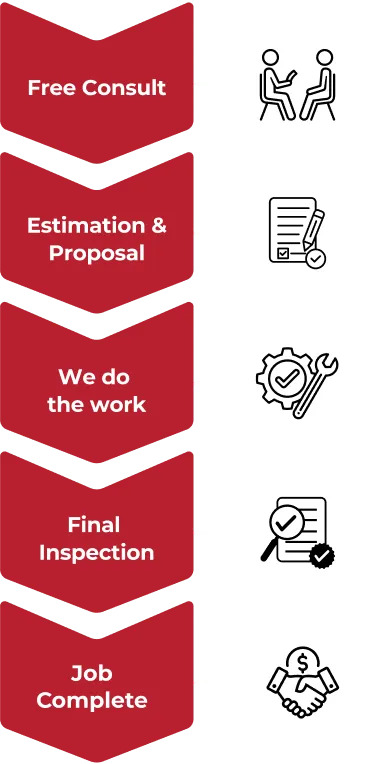
our process
Our process is simple and only contains a few simple steps

SERVICE AREAS
proudly serving Gold Coast

READY TO take the next step?
get a free quote TODAY!
Termite & Pest Control Information Centre
7 Driftwood Place, PARKWOOD QLD 4214

